
Point System vs. Sticker Chart: Which One Actually Works Longer?
Updated September 16, 2026 · 5 min read
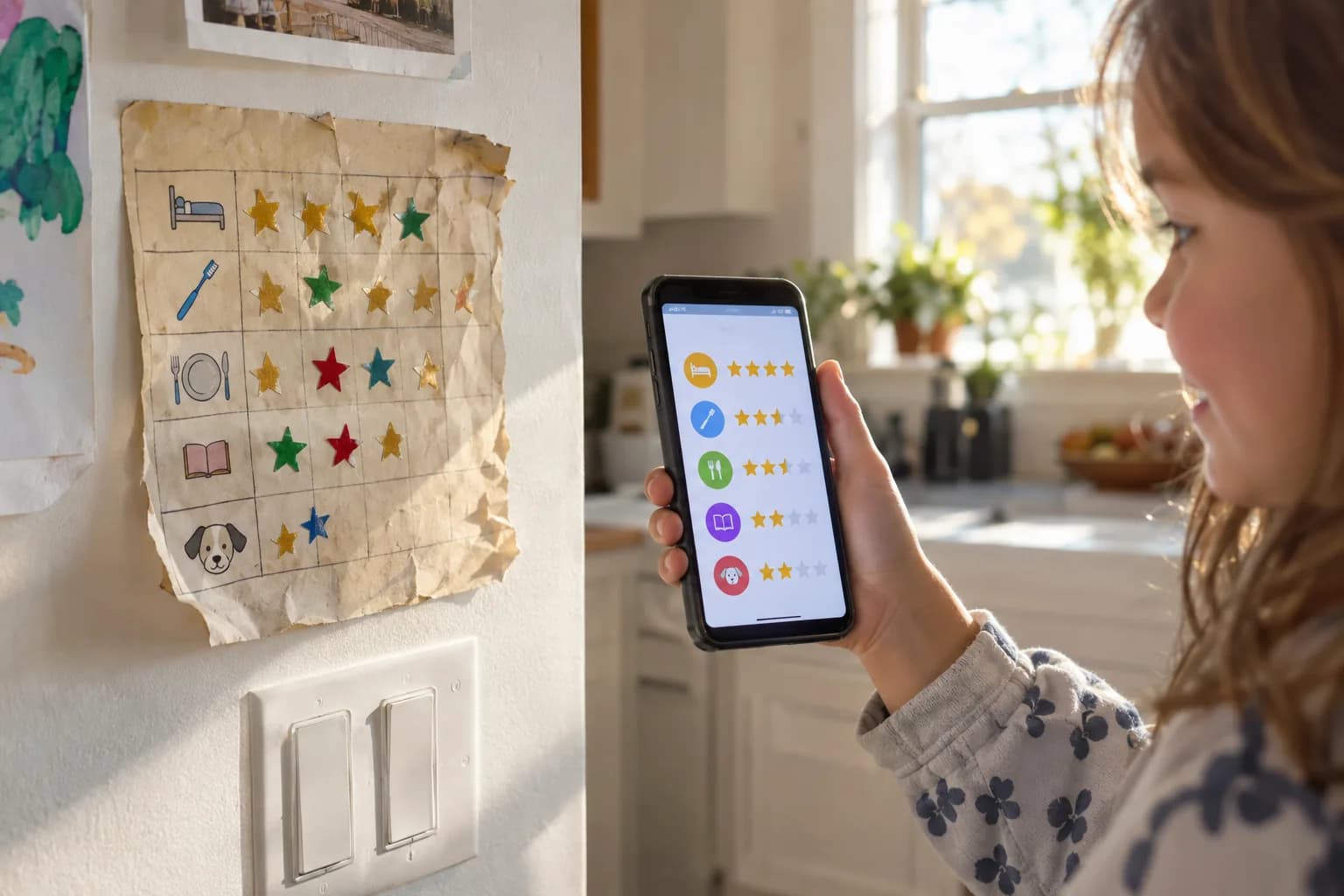
TL;DR
- •Sticker charts work great for ages 2-5 and simple, short-term goals.
- •They lose effectiveness once a kid can count and compare — a flat sticker stops feeling meaningfully different from another flat sticker.
- •Point systems scale in value, which keeps them motivating well past age 6-7 and into the teen years.
- •You can run both: start with visual stickers, transition to points as your child gets older, without switching systems entirely.
Sticker charts and point systems solve the same problem, but they age differently. A sticker chart is fast to start and works well for a 3-year-old motivated by anything shiny. The same chart usually stops working around age 6-7, right when a child starts understanding that one sticker isn't worth more than another. A point system solves exactly that problem, because points can scale — 5 points is visibly, countably more than 1.
Why sticker charts fade
Stickers are a flat reward: every sticker is worth the same as every other sticker, no matter the task. Once a child can count and compare, that flatness stops feeling like a reward and starts feeling arbitrary — 'why do I get the same sticker for cleaning my whole room as I do for brushing my teeth?'
This is developmentally normal, not a failure of the chart. It's simply the point where a child is ready for a system that reflects effort with a bigger number, not the same picture.
Why points hold up longer
A point system lets the reward match the effort: a small task earns 1 point, a bigger one earns 5 or 10. That proportionality is what keeps kids engaged well past the sticker-chart age, often through the teen years when points carry real dollar value.
Kids Point Tracker runs on exactly this logic — every task's point value is set by you, so a quick chore and a big one are never treated the same.
When to switch, and how
There's no fixed age, but a common signal is when your child starts negotiating or comparing rewards ('that's not fair, hers was bigger') — that's usually the moment a flat sticker system needs to become a scaled point system.
You don't have to abandon the visual, countable feel kids like about stickers. Kids Point Tracker's monthly point calendar keeps that same visible, fillable-in feeling, just with numbers that can grow instead of a flat picture.
Ready to try it with your own kids?
Frequently Asked Questions
At what age do sticker charts stop working?
There's no single age, but many parents notice it around 6-7, once a child can count and compare rewards and starts noticing that a flat sticker doesn't reflect how hard a task was.
Can I use points for a toddler instead of stickers?
Yes — Kids Point Tracker supports ages 2-16, so you can start with simple, low point values for toddlers and increase complexity as they grow, without switching apps.
Do point systems work for teenagers?
Yes, especially when points carry real dollar value tied to allowance. A teen is far more motivated by 'this chore is worth $3' than by a sticker.