
How to Teach Kids Money Management (Without a Lecture)
Updated September 14, 2026 · 7 min read
TL;DR
- •Money management sticks when kids make small, repeated real decisions, not from a single conversation.
- •Earning before spending is the core loop: a child has to see money arrive before choosing what to do with it.
- •Start concrete (a jar, a point, a sticker) before introducing abstract numbers like a bank balance.
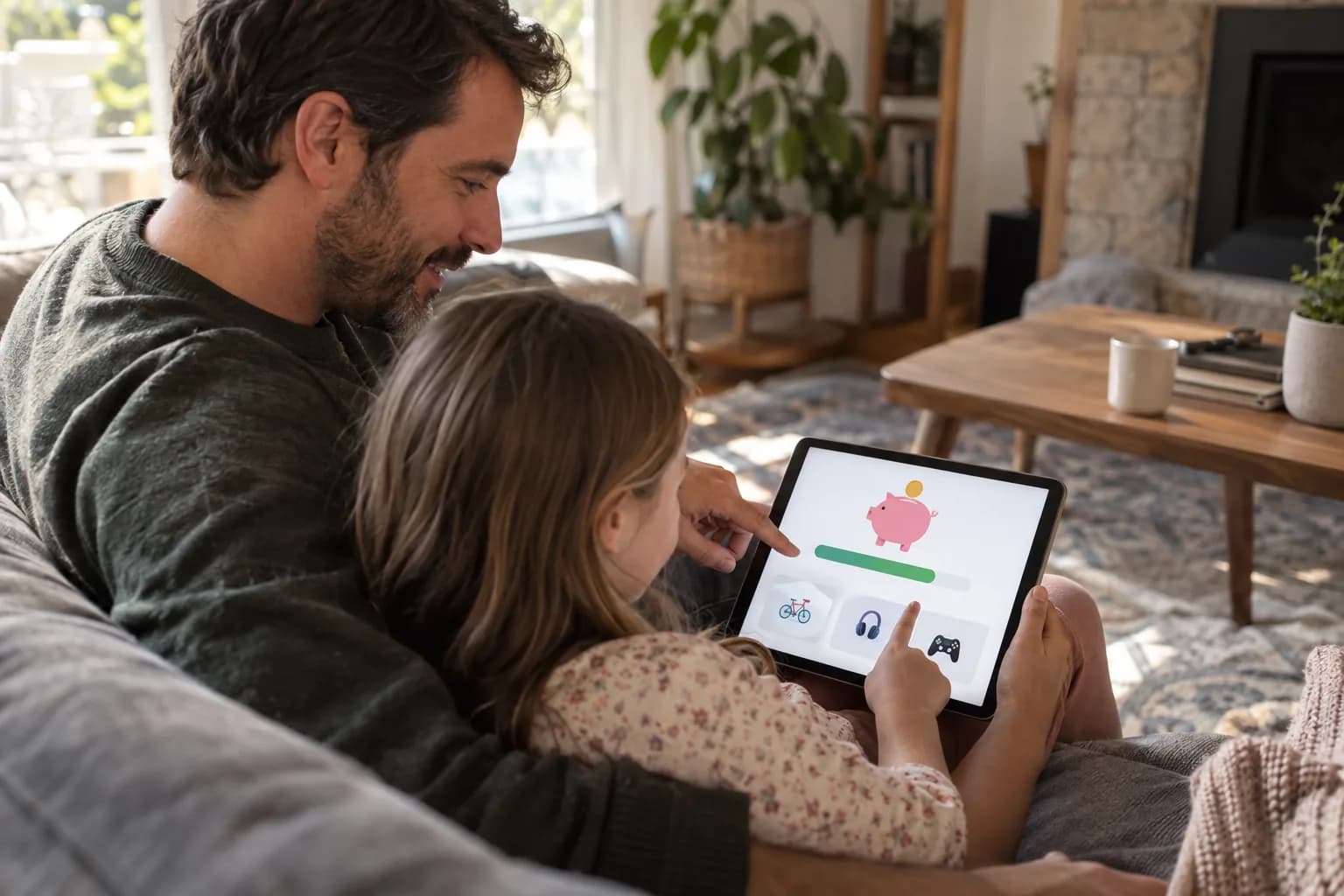
- •A digital wallet that shows an earn-then-spend history does the same job as a piggy bank, with a visible record you can review together.
Nobody learns money management from a single conversation, including adults. Kids build the habit the same way they build any other habit — by making a small real decision, seeing the result, and doing it again. The parents who actually get through to their kids on money skip the lecture and set up a repeatable loop: earn something real, decide what to do with it, watch what happens.
Start with the earn-spend loop, not a lesson
Financial literacy programs consistently point to the same finding: kids retain money concepts better through repeated hands-on decisions than through explanation. The loop is simple — a child does something to earn a small amount, then chooses whether to spend it now or wait for something bigger.
That loop is exactly what a point-and-reward system creates. Every completed chore or good-behavior moment is the 'earn'; every reward redemption is the 'spend'. Kids Point Tracker's wallet and Spend screen run this loop directly, so the lesson happens inside something your kid already wants to do.
Make it concrete before it's abstract
A 5-year-old doesn't understand a bank balance, but they understand a jar getting fuller. The right first step is a visible, countable unit — points, stickers, or coins — before introducing a number-only balance.
As kids get older, that same system can carry real dollar values without changing the mechanic. In Kids Point Tracker, the point system works identically for a toddler earning stars and a teenager earning dollars — only the rate-per-point changes.
Let them see the full history, including mistakes
One of the fastest ways kids learn 'that wasn't worth it' is seeing their own spending choice sit in a ledger next to what they earned to get there. Hiding the history removes the lesson.
A running ledger with photos and notes — like the one in Kids Point Tracker — turns an abstract 'you spent your allowance' into a concrete, reviewable record the child chose themselves.
Talk about goals, not just balances
Money management isn't just tracking a number — it's connecting today's small decision to a goal that matters to the kid. A $100 pizza party goal or a $10 screen-time reward gives the earning something to point toward.
Set milestones your child cares about, and let the app show progress toward them. That's the difference between 'save money' as an instruction and 'you're $12 away from the LEGO set' as a felt goal.
Ready to try it with your own kids?
Frequently Asked Questions
At what age should kids start learning about money?
Basic concepts like earning, saving, and choosing can start as early as age 3-4 with concrete rewards (stickers, small treats). Real dollar amounts typically make sense starting around age 6-8, once a child understands counting and comparison.
Source: Consumer Financial Protection BureauWhat's the single best habit for teaching kids about money?
Making the earn-then-decide loop visible and repeatable. A single big lesson rarely sticks; dozens of small, real decisions do.
Should I let kids see their spending mistakes?
Yes — a visible ledger that includes both good and questionable spending choices teaches more than hiding the history to avoid a hard conversation.
How does a rewards app like Kids Point Tracker fit into this?
It gives the earn-spend loop a home your kid will actually use daily, with a running ledger, goal-based rewards, and (for older kids) real dollar values — without needing a bank account or debit card.